> VOICE: Valorising Artist-led Innovation through Citizen Engagement
VOICE utilises ‘artist-driven’ interventions to enable multi-stakeholder communities to engage in dialogue but also collaborate for co-designed green and digital solutions to remedy regional or local challenges related to environmental and ecological sustainability and leading to a more resilient ecosystem
Horizon Europe HORIZON-CL4-2023-HUMAN-01-33 Coordination and Support Action. The consortium includes the Royal College of Art (UK), INOVA+, Innovation Services (PT), WAAG (NL), University College of Dublin (IE), Broadcast Solutions (UK), Future Focus21c (IE), EURICE European Research and Project Office GmbH (DE), and Research and Innovation Services d.o.o. Za Usluge (HR)..
> Video : intro to the VOICE Project
> Gallery
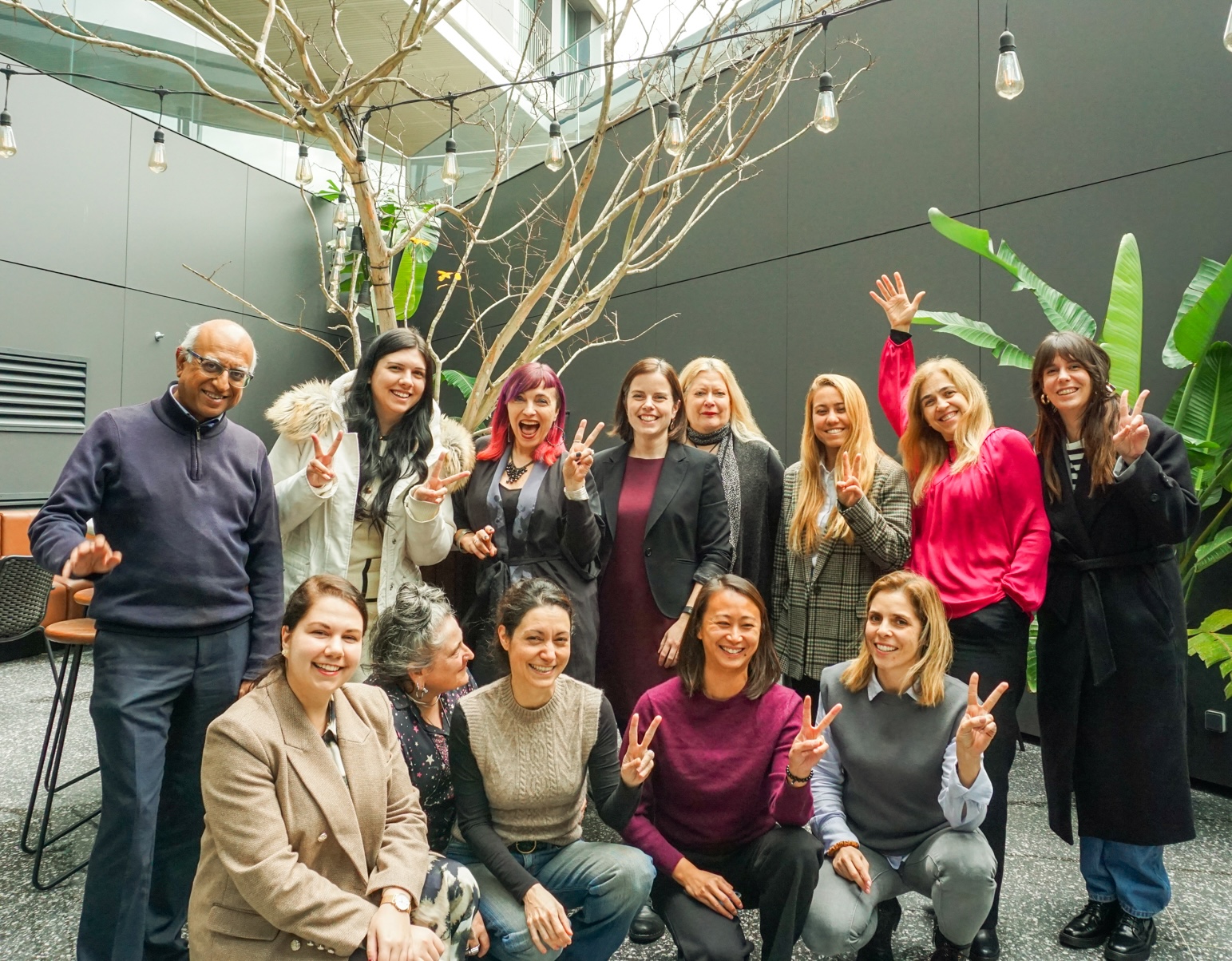
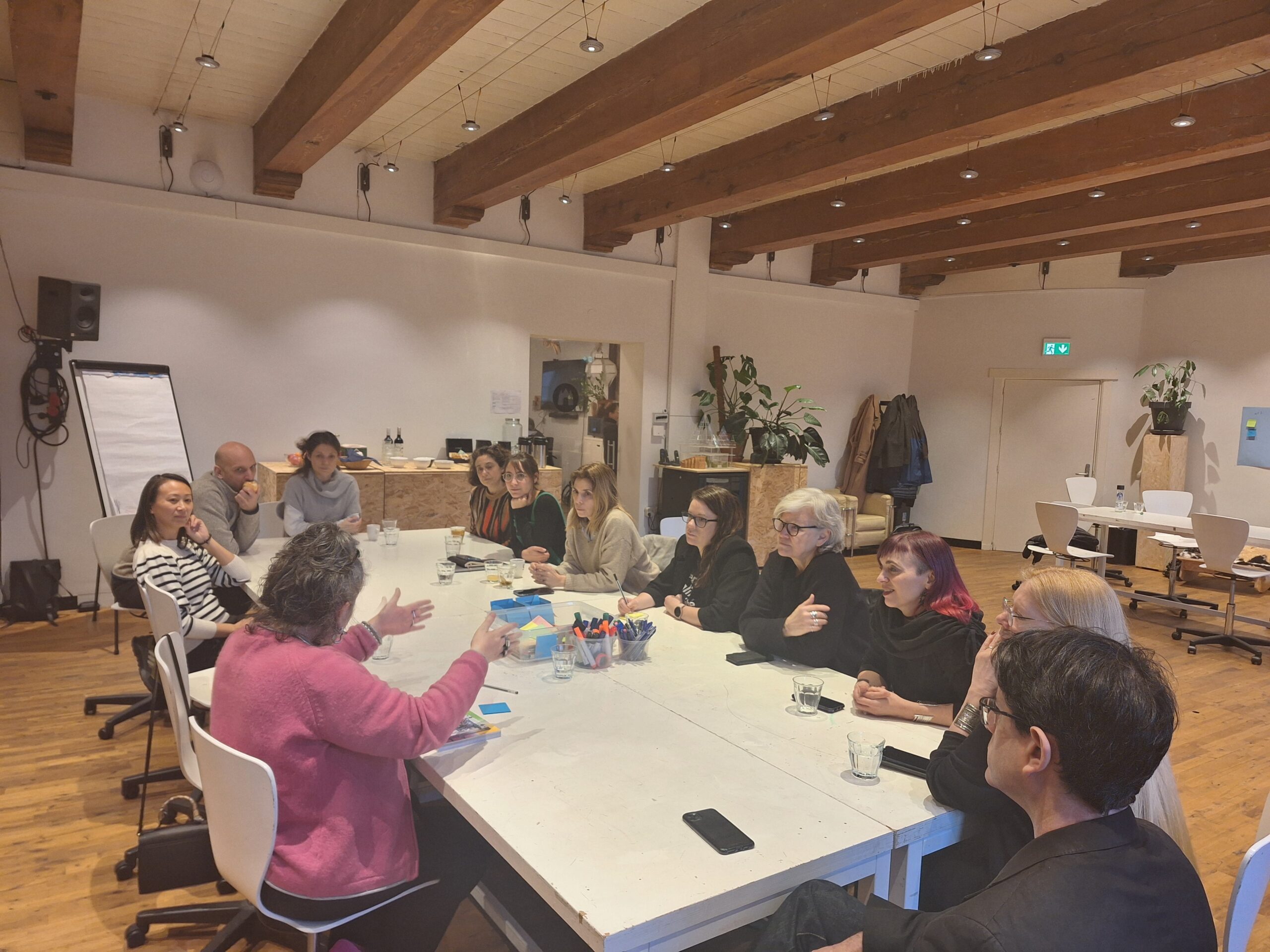
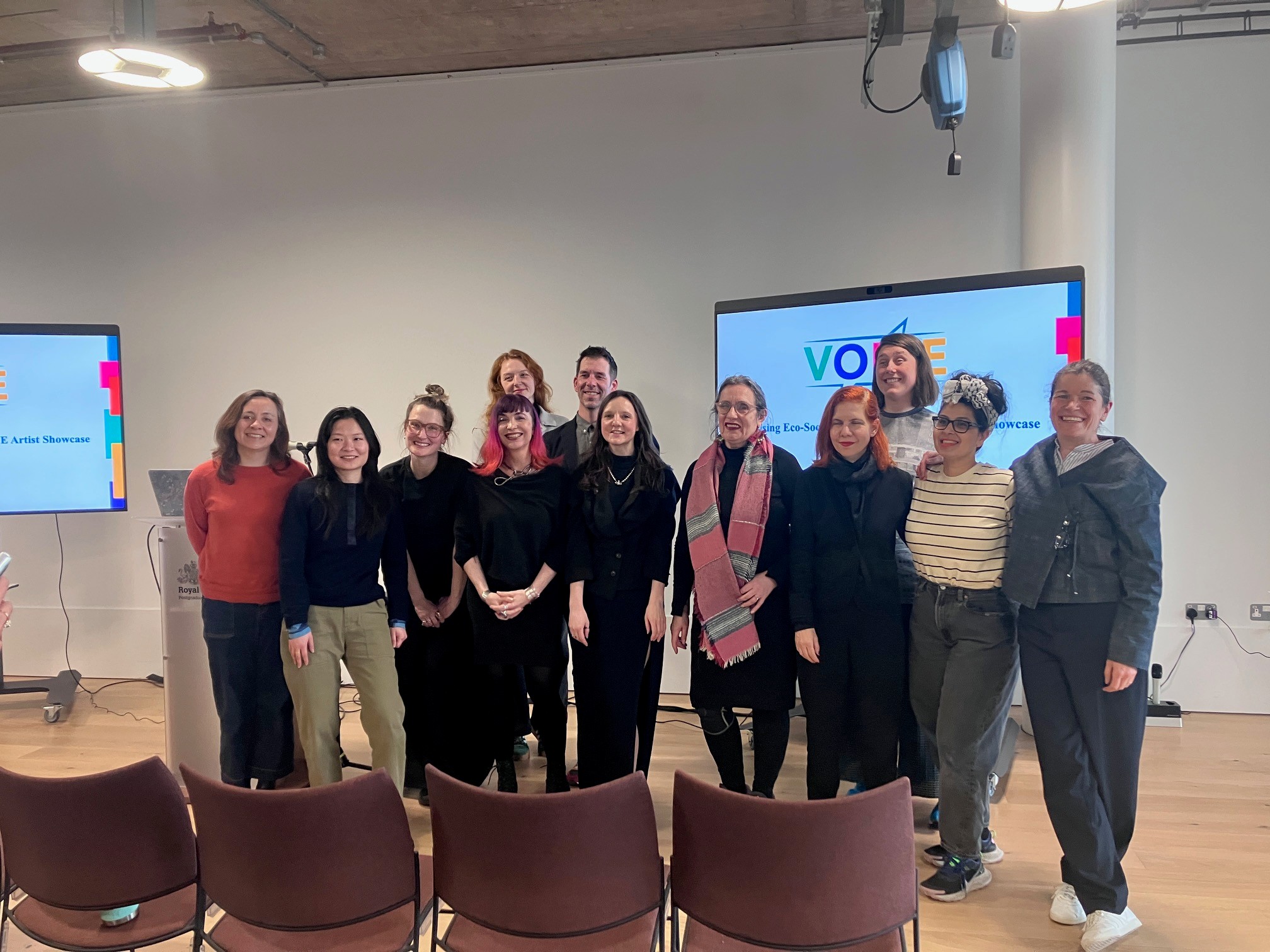
> Timeline
January 2024 – October 2026
> Collaborators
- Marta Coto – Senior Project Manager, INOVA+ (PT)
- Ana Leal – Director, Partnerships Directorate, INOVA+ (PT)
- Mafalda Ferreira – Consultant, Project Manager, INOVA+ (PT)
- Professor Camille Baker – Principal Investigator for Royal College of Art (RCA) UK
- Victoria Geaney – Industry Project Researcher, RCA UK
- Dr Anita McKeown, Co-founder / DirectorFuture Focus 21st Century (FF21C) Ireland
- Professor Lizbeth Goodman, Professor of Inclusive Design, Founder/Director, SMARTlab Global, University College Dublin (UCD) Ireland
- Zeynep Birsel, Senior Researcher, Art-Science, WAAG Society, The Netherlands
- Margherita Soldati, Concept Developer, WAAG Society, The Netherlands
- Huw Williams, Broadcast Solutions, UK
> Abstract
VOICE aims to address the complex social and cultural constructs that play a vital role in supporting knowledge valorisation and bringing systemic change towards environmental and ecological sustainability. Sustainability of a balanced and healthy environment and ecological landscape, as noted by the Green Deal, is a multilayered topic which involves a networked relationship among citizens, industries, and governments as facets of human agency but also vital unheard voices of non-human agents that are an integral part of the environmental and ecological systems. As concerns over economic and social wellbeing start to mobilise communities to inhabit urban areas in many regions in Europe, as well as globally, we are faced with the challenge of collectively generating, sharing and transferring multifaceted knowledge that will empower diverse stakeholders and communities to undertake an active role in addressing complex environmental and ecological sustainability challenges. Often characterised as a transdisciplinary domain, these challenges invite more critical approaches to how we design technologies, who makes, who benefits, and who contributes to provide an economically and socially conducive environment for fast uptake and diffusion of technology and breakdown inequalities, generating new knowledge in the process. VOICE consortium advocates that solutions should not be predominantly market- or technology-driven but concern-driven. Such an angle necessitates critically engaging with environmental problems, concerns, and interests of groups in a ‘dialogue’ platform.
Coming from this direction VOICE proposes a distinct approach framed as ‘artist-driven’ interventions to enable multi-stakeholder communities to engage in dialogue but also collaborate for co-designed green and digital solutions to remedy regional or local challenges related to environmental and ecological sustainability and leading to a more resilient ecosystem. Formulated as Art-Technology-Society Interactions (ATSI), these initiatives will form the backbone of artist-led interventions as platforms for dialogue, knowledge exchange and transfer among the key players/stakeholders in the VOICE ecosystem.
Utilising artistic tactics, VOICE will simultaneously challenge prevailing narratives of the 4th IR (4IR)13 while identifying opportunities for the development of reciprocal acts encouraging shared ownership and responsibility – meaning they are subjected to 4IR but have agency in shaping it and owning it – and enrichment of the 4IR by the inclusion of diverse knowledge, cultures, and sustainable practices (5IR). If 5IR is to be equitable and fit for purpose, its ethical and philosophical ‘operating system’ needs rebooting in line with the 21st Century challenges. Information, education, and critical thinking are the key to freedom, equality and social justice. Therefore, using art as a medium that empowers creative and critical thinking, we can challenge or consolidate dominant messages and reinforce the bottom-up approach, citizen-led or inside-out approach towards dealing with complex challenges.
> Partners
- INOVA+
- The Royal College Art
- WAAG Society
- Future Focus 21st Century
- University College Dublin
> Budget / Funding
European Commission, HORIZON-CL4-2023-HUMAN-01-33 Coordination and Support Action: VOICE: Valorising Artist-Led Innovation Through Citizen Engagement Grant ID: 101135803.I am the PI for the Royal College of Art (UK). Partners include:INOVA+, Innovation Services (PT), WAAG (NL), University College of Dublin (IE), Broadcast Solutions (UK), Future Focus21c (IE), EURICE European Research and Project Office GmbH (DE), and Research and Innovation Services d.o.o. Za Usluge (HR).
FUNDED (€1,334,568.52 total across all partners/€150,086.03 for RCA, with additional funds transfer in June 2026 £24,000 from withdrawn partner Brunel) Duration: January 2024– Oct 2026
> Outcomes / Impact
VOICE tested the proposition that fostering knowledge valorisation through societal and cultural interactions could contribute to ecological and cultural transformation at European scale. The combined 20-project evidence base supports the proposition and identifies several implications for practice, funding, and policy that were not anticipated at the outset. At the heart of the European twin transition, Digital (2022) and Green (2019), lies a problem technology alone cannot solve: systemic change requires societal acceptance, and societal acceptance requires cultural mediation. Individually, each project was a situated, community-grounded response to a specific ecological or social concern; collectively, they constitute one of the most comprehensive evidence-bases yet assembled for what artist-led, citizen-engaged eco-social practice can contribute.
One of the clearest findings concerns the nature of the work itself, often overlooked and under-funded. The relational, coordination, and developmental labour that makes socially engaged and eco-social practice possible is not peripheral to the creative process; it is an integral part of it. Artists working at the intersection of community need and ecological urgency spend significant time building trust, preparing hosts, navigating institutional cultures, and holding the conditions for co-design often before a single workshop or intervention can take place. Treating this as administrative overhead, separable from and less valuable than the artistic output, systematically under-resources the very conditions that produce impact.
This raises a question of authorship the evaluation could not resolve: where the boundary of authorship lies when relational and co-ordinative labour is entwined with producing the work, and who undertakes that labour when the artist does not. This is identified as a question for future programme design (Section 5.3). The VOICE evidence makes a direct and practical case: investment in development time, host preparation, and relational infrastructure is not a cost to be minimised but a precondition for everything that follows. That relational investment also produced a substantial contribution to the field through systematic data collection across the full portfolio, drawn from artist logs, community surveys, capacity-building events, mentoring reports, pCr interviews, final VSM assessments, and three- and six-month evaluation reports.
This identified 142 discrete knowledge gaps (Appendix C) across the eco-social ecosystem, spanning artists, funders, host organisations, commissioners, policymakers, and creative-practice researchers, and ranging from environmental literacy within biomedical institutions to legal frameworks for river rights and missing vocabularies for more-than-human governance and ecological stewardship. These gaps emerged not from theoretical analysis but from the practice of 20 artists working at close range with communities and their specific concerns. The result is the empirical foundation for the first eco-social ATSI deployment toolkit (D3.1), an open-source resource designed to make this knowledge useful and replicable across the field and beyond.
A further shift was evident across the projects in who makes the work and holds authorship: the studio-artist-as-sole-author model was replaced, project by project, by a distributed model in which artists acted as hosts, conveners, and co-designers while community members shaped process, outputs, and meaning. The evidence indicates this is a distinct conception of how localised knowledge is produced and owned, and that co-authored outcomes were more often continued by communities after funding ended than conventionally commissioned work. Co-authorship in this sense generates knowledge and tools for change that no individual practitioner could produce alone, and it confers durability on outcomes, building the foundations for communities to continue the work beyond the project cycle, something conventional commissioned practice rarely achieves because the necessary relational investment is neither present nor an aim of that practice.
One of the most practically significant findings concerned technology itself. The VOICE brief required each ATSI to combine two of three elements: methodology, technology, and society or community. [1] What the projects revealed was more useful: technology had to earn its place in each community context, and in a significant number of cases the most effective solution was simpler, slower, or more analogue than originally planned. Voyage 2 held high technology, underwater cameras, drones, and kinetic sculpture, in genuine tension with traditional ecological knowledge and Indigenous worldview rather than in hierarchy; Hydrohacking the Archive chose analogue-as-care as a principled methodological commitment rather than a limitation; and Neural Nectar built sophisticated custom acoustic devices but allowed the bees to reshape and in some cases reject designs, holding the technology accountable to its more-than-human end users. What this pattern demonstrates consistently is that effective technological integration in eco-social practice is not about the technology chosen but about the community’s relationship to it. The EU twin transition will not be delivered by imposing digital solutions on communities unprepared or unwilling to receive them; it will be delivered by practitioners with the sensitivity, the trust, and the time to know when, how, and what type of technology serves, and when to put it down. The ATSIs also demonstrated artist leadership in SDG localisation. The ATSI’s were not designed around the Sustainable Development Goals as a compliance framework but around people and their ecological realities, and that engagement produced direct, human-scale, and emotionally resonant contributions to SDGs 11, 12, 13, and 17. Artists asked different questions than scientists, policymakers, or technologists, they worked intimately within trust-building scenarios, bringing communities into contact with ecological concerns through sensation, storytelling, making, and play rather than through information transfer alone. Participants reported perceptible shifts in environmental awareness, relational understanding, and behavioural intention grounded in a rich, triangulated dataset rather than self-reporting alone. All of this converges on valorisation, understood not narrowly as dissemination or commercial uptake but as the creation of genuine, lasting value from artistic and community knowledge, for and with the communities that generated it.
The evidence indicates that societal acceptance in these projects arose from co-creation rather than from communication or user-testing, that is, from community presence at the point where knowledge was co-produced rather than at the point of delivery. Valorisation in this context was therefore relational as well as instrumental. It was evidenced in documented outcomes: participants reporting a clearer understanding of their role in the ecological transition, open-source protocols adopted by researchers, a river-rights framework a civic group continued after funding ended, a hospital sensory protocol co-drafted with Highly Sensitive Persons, and documentary evidence used in advocacy over a salmon-migration barrier. These are among the mechanisms through which the practice contributed to institutional and behavioural change. The EU call focused on ‘fostering knowledge valorisation through societal and cultural interactions’, VOICE’s 20 ATSIs responded through practice and in doing so co-produced the evidence, tools and models to make their contribution legible, scalable, and fundable at European level.
> My Role
I was one of the key drivers in this project alongside Dr Anita McKeown, as we tried to apply for 2 other versions of this project for two different funders until this opportunity came to me and then I shared it with McKeown. And due the being between deals with Europe after Brexit, it initially seemed that UK organisations couldn’t lead work packages, so I didn’t initially lead any but contributed to most. But once the other UK partner pulled out, RCA and I took over leading the completion of activities for final and most conclusive Work Package 4 – responsible for delivering the digital platform, the ATSI Catalogue, the Methods Repository, the Key Enabling Methods (KEMs) and contributing to the development of the Toolkit WP3 as it lives on the digital platform as well as the list of capacity building and valorising actvities of the project – all the visible and public outcomes as part of the project’s legacy.
The link to the platform is coming soon.